





The top 10 most important supplement trends of 2026
As usual when the calendar turns over, the health and wellness industry publishes a bunch of reports and articles predicting the trends that will shape our industry this year.
So that you don’t have to read them all, we combed the internet to find the most frequently mentioned consumer health and wellness trends. We wanted to identify the trends that pretty much everyone, from research and consultancy companies to industry experts agrees that are THE ones to pay attention to.
So, here they are: The 10 most popular nutraceutical and supplement trends and their implications for supplement companies and CDMOs.

1. Personalized nutrition goes mainstream (as long as it’s “easy”)
Consumers increasingly expect supplements to be tailored to their individual needs, be it age, gender, lifestyle, health goals or even their microbiome.
Today’s technological advancements such as AI-based health and nutrition advice and small at-home diagnostic kits enable consumers to take a more active role in their own wellness pursuits. When faced with an information overload, personalization offers clarity and at least a perceived level of effectiveness.
However, technology needs to be simple enough to use, without complex software or long waits and tests at the doctor’s office.
Implications for supplement brands and CDMOs
- Personalization at the production level is not necessary. Add-on products and bundles often scale better.
- CDMOs need to ensure we can offer our customers flexible batch sizes and SKUs and agile production methods.
- Consumers learn to expect even more quiz- and AI-based product recommendations and create-your-own supplement models.
- Consumers shouldn’t be left alone to figure it all out with AI and quizzes. Brands need to guide the consumers to the right information and offer high-quality advice.
- Not everyone can afford home test kits. Personalized customer service in the age of AI should be seen as a benefit and not a cost factor.

2. In the GLP-1 era, weight management shifts to "metabolic health."
Weight management and “dieting” are being reframed. Due to the popularity of weight-loss drugs, consumers are looking for products to offset possible side effects from these drugs, such as muscle mass loss, low energy and satiety, and nutrient deficiencies.
And it’s not just the people using these drugs. Similar habits are expected to be adopted by non-users as well.
Implications for supplement brands and CDMOs
- Don’t use messaging such as “weight-loss”; talk instead about “metabolic health” or “body composition.”
- Demand for protein (more on that later), amino acids, fiber (more on that later) and micronutrient support will increase.
- Position your products as supporting the use of weight-loss drugs by using the word “GLP-1” in your marketing.
- Ensure all claims are substantiated and compliant with applicable regulations.
3. Mental wellness supplements become part of the daily routine
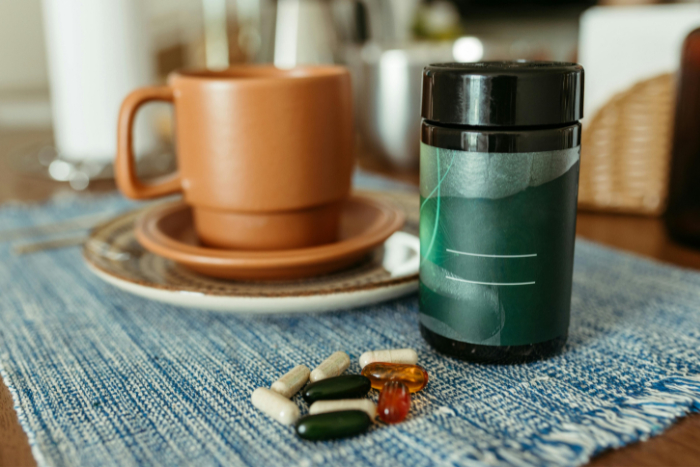
Stress, anxiety and sleep issues aren’t considered exceptional health issues anymore, but part of a normal life. Consumers are increasingly building daily mental wellness routines with supplements, digital tools and fitness.
Taking a supplement to support your focus is becoming a part of a daily routine, similar to a cup of coffee in the morning. We have also witnessed this trend, as sales of our Griffonia + magnesium, and vitamin B white label combo products increased significantly between 2024 to 2025.
Implications for supplement brands and CDMOs
Adaptogens, magnesium, nootropics, ingredients that support mental performance and sleep are still growing categories.
Combi products that focus on mental wellness as a whole, from mind to mood and sleep, gain the most attention on the market.
Taste, format and time-of-day usage matter greatly. Expect the popularity of gummies and powders to rise, as they can also be conveniently incorporated into daily routines.
High-quality ingredients, scientific evidence and substantiated claims build trust in a crowded market
4. Gut health expands to a broader ecosystem
Gut health continues to be an important topic, but it’s also evolving. Taking care of one’s digestive system is not just about taking probiotics alone. It’s about taking care of one’s whole microbiome.
People's understanding of the science behind the importance of the digestive system and its impact on overall health continues to grow. Hashtags such as #fibermaxxing related to increasing fiber intake are gaining momentum. Taking care of one’s gut is not done just for better digestion, but for better mood, immune function, and even complexion as well.
Products containing prebiotics, postbiotics, digestive enzymes and multiple ingredients are sought after. This is reflected in the three-digit growth of our chlorella capsules.
Implications for supplement brands and CDMOs
- Opportunity to move beyond single-strain probiotics into multi-ingredient gut solutions.
- Clear education is critical as consumers are curious but easily confused by different pre- and postbiotics and their functions.
- Shelf stability, delivery systems and a strong brand are major differentiators.
- Evidence-based formulations are essential to avoid regulatory mishaps.

5. Healthy aging & longevity positioning becomes more specific
Freddie Mercury famously asked, “Who wants to live forever?” And the answer today is: Almost everybody. At least, if the longer life is also a healthy one.
People don’t just want to “live longer.” They are now seeking specific aging-related benefits to support their cognitive abilities, mobility, cardiovascular health, cellular energy, and vitality throughout the years.
Thus, it’s no wonder that our vitamin K2, D, and OPC grape seed extract white label products experienced an impressive 3-to-4-digit growth from 2024 to 2025.
There is no slowing down this trend, as the world population is getting older and living longer. This also puts pressure on governments to encourage longer working lives, which increases the demand for longevity products.
It’s not just a trend among the senior population. Younger consumers also want to prepare for old age as soon as possible.
Implications for supplement brands and CDMOs
Segment products for longevity by life stage and function, not based on age alone.
Combine prevention + performance messaging for best results. Try e.g. messages such as “stay sharp” or “stay mobile.”
Credible and tested ingredients are especially important.
Foster long-term loyalty with innovative formats, quality and a strong brand.
6. Women’s health accelerates across life stages
The historical gap in the representation of women’s needs in health research and product design is closing each year. As it should!
Women are demanding healthcare solutions that are tailored to specific life stages. Forget generic “women’s multivitamins.” What women want are products that support menstrual health and fertility, and during pregnancy, in peri- and menopause, and beyond.

Implications for supplement brands and CDMOs
Life-stage segmentation is an opportunity to differentiate and offer a wide product range.
Marketing and positioning require careful language and scientific grounding.
Creating trust, having the right tone, and being transparent work better than aggressive claims.
An extra dose of credibility can be gained by co-creating supplements with women. Co-creating with women influencers who fit the brand can also boost awareness.
7. Beauty-from-within category keeps on diversifying
Eating our way to more hydrated and radiant skin, longer hair and stronger nails is not a novelty anymore, but a regular wellness routine. The popularity of gummies, powders and other holistic beauty solutions keeps on rising.
This trend was clearly a key driver of the recent sales growth of our coenzyme Q10, zinc and “Skin, Hair & Nails” white label products.
Implications for supplement brands and CDMOs
- Strong opportunity for collagen, antioxidants, and hydration product innovations.
- Sensory experience (taste, texture, color) is critical.
- Products need to balance aspiration with scientific validity.
- Partnerships with existing beauty brands, influencers or retailers could be a growth accelerator.

8. Performance nutrition category broadens beyond athletes
Protein powders and creatine supplements are no longer just for athletes. Functional fitness culture and metabolic health concerns are mainstream.
Even your “average” person wants to feel strong, energetic and resilient to tackle just their everyday tasks. These benefits are even more important for aging individuals and those trying to manage their weight.
Implications for supplement brands and CDMOs
- Offering diverse types of proteins (plant-based, blended, functional) is key.
- Position performance as supportive, not extreme, to attract a wider audience beyond athletes.
- Formats that can be easily integrated into daily routines win (think powders, bars and functional beverages).
- Clean labels and digestibility are decisive.
9. Hydration but make it functional
We all need to drink water, but staying hydrated has become more than that. People’s active lifestyles and the popularity of wellness tracking have raised hydration awareness, which has expanded into functional hydration.
Instead of being concerned about how many glasses of water we drink, people think about their intake of electrolytes and hydration’s benefits to energy, focus and beauty.
Implications for supplement brands and CDMOs
- Powder sticks and other dissolvable products are a growing category.
- Offering low-sugar or “naturally sweetened” options is essential.
- There must be a clear differentiation between “sports” and “everyday” hydration in marketing messaging.
- A strong crossover potential can be found in combining beauty and performance categories. (See trend 7: “Beauty from Within.)
10. Trust, transparency, and “clean” product design are crucial
As the saying goes, building trust takes years but it can be lost in one second. And it couldn’t be truer for supplements.
Consumers are more skeptical and informed than ever. Scandals and misinformation can spread through social media like wildfire. Regulatory bodies in many countries are placing tighter restrictions on supplements, or at least watching the industry more carefully.
Brands should invest as much in quality, sourcing, bioavailability, and evidence as they do in branding and marketing, if not more. We hope this is a trend that will never go out of style. We’re committed to doing our utmost to ensure this.

Implications for supplement brands and CDMOs
- Anybody can claim clean labels; the differentiation comes from being able to prove it through scientific evidence.
- Build loyalty through storytelling around sourcing and manufacturing. You visited the farm where your medicinal mushrooms come from? Show it!
- We CDMOs play a critical role as trust enablers, not just manufacturers.
Conclusion
These trends combined with what we’ve witnessed from the sales growth of our white label products can be summarized as follows:
Preventive micronutrition via core vitamins and minerals is still a winning category. Our best-selling and best-growing white label products are “basic” products such as vitamins D, K, C, B and magnesium.
Consumers trust “boring but proven” ingredients more than “hyped ingredients”, if positioned well.
Products that support multiple health goals from longevity and beauty to mental health are growth drivers.
- Botanicals are other plant-based or “non-pharmaceutical” ingredients are gaining popularity. We could notice this from the sales growth of our products containing e.g. grape seed extract (OPC), frankincense (Weihrauch in German), chlorella and Griffonia.
- Supplement companies need to be able to show, not just tell, the benefits of their products.
We’re excited for a new year of providing competitive products to supplement brands to help their customers reach their health goals!
Sources
- McKinsey – Future of Wellness (2024–2025)
- Innova Market Insights – Global Supplement & Nutrition Trends
- Euromonitor – Health & Wellness Trend Reports
- SPINS – State of Supplements & Ingredients to Watch
- Nutraceuticals World – Category & Format Trend Coverage
- Nutritional Outlook – Ingredient & Market Analysis
- Vitafoods & SupplySide industry trend reporting
- FMCG Gurus – Consumer wellness sentiment studies
© 1Q Health GmbH, Gewerbestraße 8, 82064 Straßlach
Source: https://1qhealth.com/Top_10_supplement_trends_2026
